They inherited a database
They need to understand structure quickly without reading every table definition line by line.
DataPilot ERD helps engineers, analysts, architects, consultants, and product teams convert SQL into a visual schema, inspect legacy databases faster, document table relationships, and share one clear ERD workspace for review.
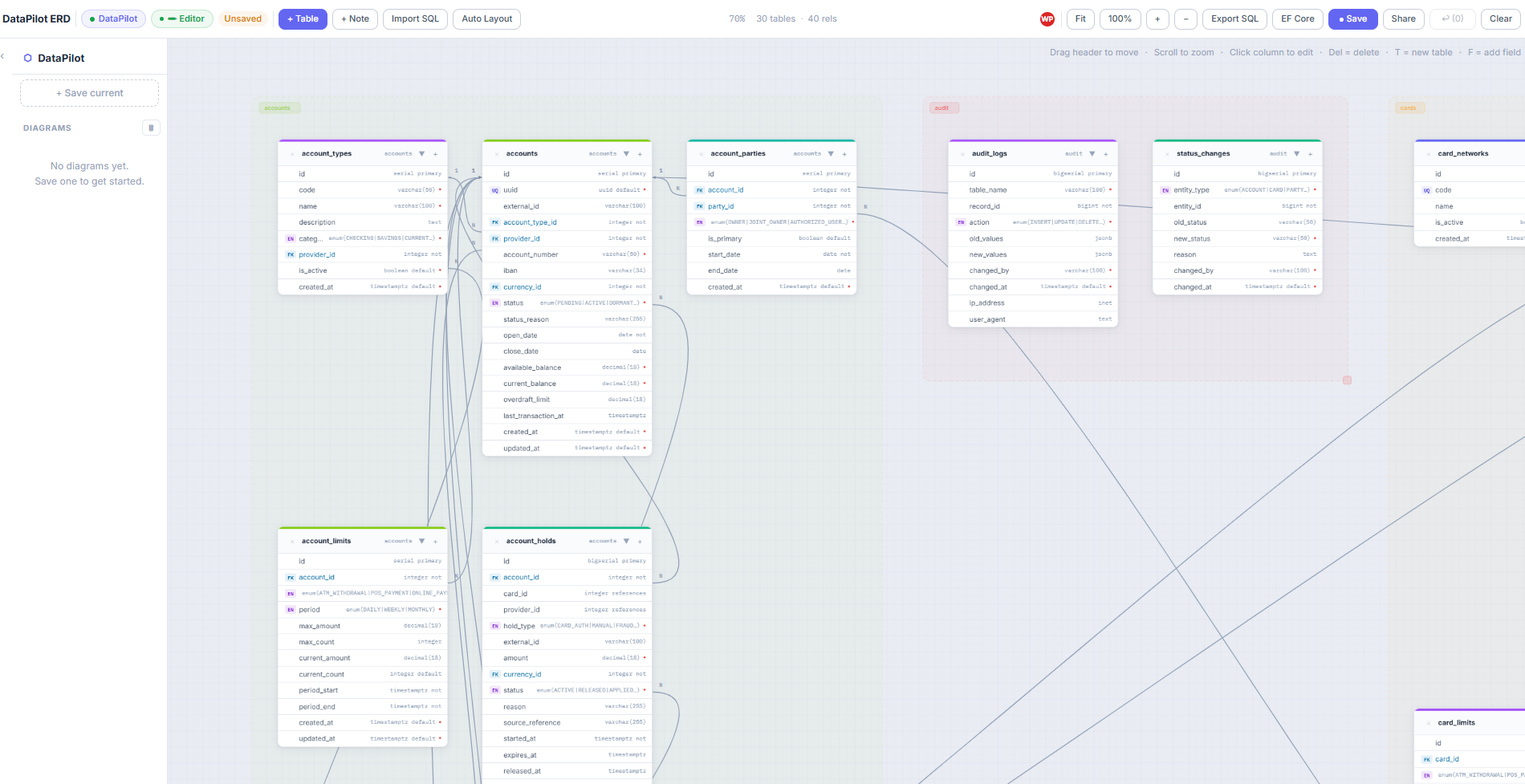
They need to understand structure quickly without reading every table definition line by line.
They want to paste DDL and generate the first visual pass instead of redrawing the schema by hand.
They want one workspace where teammates can see the same structure, notes, and changes.
They want notes, relationships, and explanation to live next to the schema instead of in scattered screenshots.
Start with the broad public entry point for online ERD creation and visual schema work.
Convert DDL into a first visual model and keep refining from there.
Work through incomplete legacy schemas and reconstruct relationships faster.
Reduce noise and focus the part of a high-table-count schema that matters.
Review one diagram together with named presence, controlled editing, and revision refresh.
Keep notes, explanations, and structure in the same visual documentation layer.
Beyond diagrams
You just explored a schema. What if the whole database stayed documented — with alerts on every schema change and scheduled SQL exports — through an on-premise agent that never opens your DB to the cloud?
Move from one-off diagrams to living documentation that stays in sync with your schema, backed by a private on-premise agent.
Get notified when your schema changes and schedule SQL exports without exposing the DB to the cloud.
FAQ
Yes. DataPilot ERD lets you import SQL into the visual canvas so you can start from an existing schema instead of rebuilding tables manually.
Yes. The tool is especially useful when you inherit a schema and need a faster visual overview of tables, relationships, and dense areas of the model.
Yes. You can open shared workspaces, see named participants, and review diagrams together with a lightweight collaboration flow.